


Gaudí y Güell
La Colònia Güell It cannot be understood without two names. Eusebi Güell, a visionary industrialist who built a living environment around his factory; and Antoni GaudíThe architect who transformed a church commission into a laboratory of never-before-seen forms. Without Güell There would be no Crypt—nor a good part of the Gaudí that the world admires today—; without GaudíThe colony would be just one more. Its history is that of an unrepeatable crossroads: creativity, industry, innovation and a social model, all in one place.
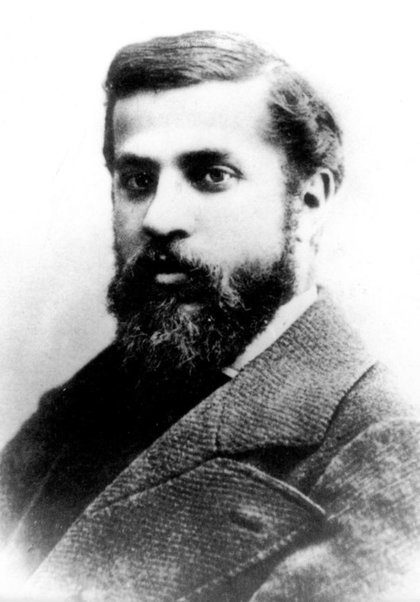
Antoni Gaudí i Cornet
The revolutionary architect
No one has moved architecture so far away from the straight line. Gaudí He transformed stone, brick, and iron into his own unique language, inspired by nature and sustained by an unparalleled structural intuition. A century after his death, his work still seems futuristic.
Born into a family of coppersmiths in the Baix Camp region, he grew up watching his father shape copper and how water, trees, or bones naturally resolved problems of form and strength. Fragile health—he suffered from rheumatism since childhood—often kept him from playing and drew him closer to observation. That observation, honed by the "great book of nature," would be the origin of everything.
He graduated as an architect in Barcelona in 1878Tradition tells that the school's director hesitated before signing the diploma: "I don't know if we're giving the diploma to a madman or a genius." That same year, a young industrialist named Eusebi Güell He noticed a display case that Gaudí He had designed something for a glove maker at the Paris Exhibition: it was the beginning of the friendship and patronage that would change his life.
His style never stopped evolving: from Orientalism colorful from his beginnings (Casa Vicens, El Capricho) to neo-gothic refined (Palau GüellBellesguard), up to the organic fullness from Casa Batlló, La Pedrera, the Park Güell and Sagrada FamíliaBut his great revolution was silent and structural: he replaced the wall and the buttress with the ruled geometry —catenary arches, inclined columns, warped surfaces—, forms that gravity itself makes stable. Gaudí He didn't decorate: he made the building find its form.
Deeply religious tourism and increasingly austere, he lived his last years almost like an ascetic, devoted entirely to Sagrada FamíliaHe died in 1926He was killed by a tram; at first, no one recognized the most admired architect in Barcelona in that humble-looking old man. Today, seven of his works are World Heritage and 2026 marks the centenary of his death.
"Originality consists of returning to the origin."
Antoni Gaudí
«Gaudí "He broke the boundaries of architecture, and now we are beginning to understand how to build the way he built."
Arata IsozakiArquitecto
"Barcelona would not be what it is without GaudíThe spirit of a single man has become a World Heritage Site.
Marta Eri RufatFounder of TrencadisBarcelona
Most known works
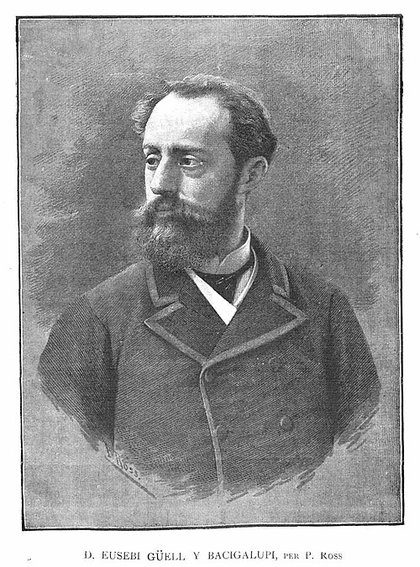
Eusebi Güell i Bacigalupi
The visionary entrepreneur
Behind almost everything Gaudí that the world admires today has the same name. Eusebi Güell He was much more than a wealthy client: a cultured and ambitious industrialist who put his fortune, his network, and his trust at the service of an idea—modern, Catalan, and beautiful—and found in Gaudí to the architect capable of giving it shape.
Son of the industrialist and economist Joan Güell, was trained in mechanics, economics, law and applied sciences between Barcelona, France, and England. He was not a passive rentier, but a enlightened urban patricianHe was equally interested in the factory and science, music and politics. 1871 He married Isabel López i Bru, daughter of Antonio López, Marquis of Comillas, thus entering one of the most powerful financial networks in Restoration Spain.
Its main foundation was the textile —the corduroy factory that, together with Ferran Alsina, he moved to Santa Coloma de Cervelló and which would become the Colònia Güell—, but his ambition went much further: cement, banking, transport, tobaccoIt was, in today's terms, a grid invertercapable of connecting industry, finance, and infrastructure. That same scale explains his approach to commissioning architecture: he didn't want isolated buildings, but complete rooms.
With Gaudí acted as a high-risk cultural investorHe showered him with commissions, accepted unheard-of solutions, and assumed the cost of experimenting. For the architect, it was something akin to what the Medici had meant for Michelangelo: the patron who transforms extraordinary talent into a universal legacy.
An empire with many fronts
Companies he created or promoted
- Colònia Güell — corduroy and velvet textile factory (with Ferran Alsina)
- Asland — Compañía General de Asfaltos y Portland (1901), pioneer of cement in Catalonia
- Hispano-Colonial Bank — advisor
- General Tobacco Company of the Philippines
- Railways of Northern Spain — railroad
Public and cultural life
- Councilor of Barcelona, deputy provincial and senator
- 1st Count of Güell — title of Alfonso XIII (1908)
- President of the Floral Games (1900)
- Member of the Royal Academy of Fine Arts of Sant Jordi
- Patrons of musicians, painters and writers; the Palau Güellcultural setting
Genius + patron
A friendship that made history
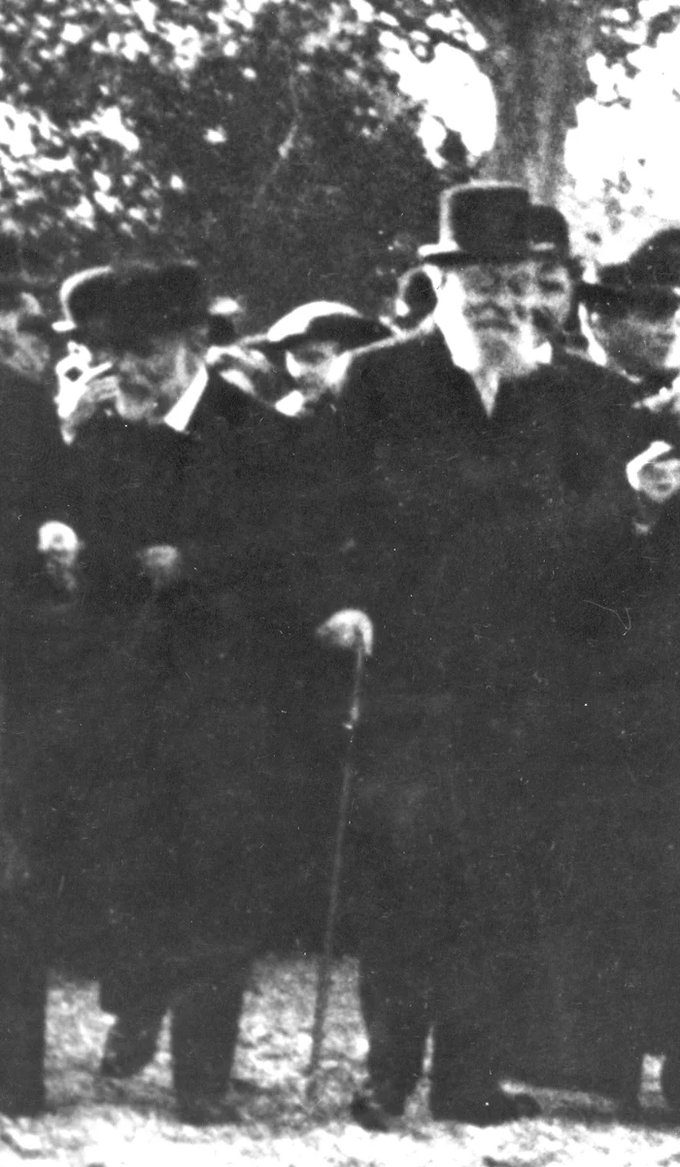
They met in 1878At the Universal Exposition in Paris, Güell He noticed a display case made of wood, iron, and glass that a young and almost unknown architect had designed for the glove compartment. Esteve Comella —and that he had won a medal there—. He asked who the author was and, back in Barcelona, wanted to meet him. From that encounter a relationship was born that would last forty yearsuntil the death of Güell.
What began as a client-architect relationship soon transformed into friendship and intellectual complicity. Güell I truly admired the creative ability of Gaudí and gave him the freedom to work; that freedom is the key to understanding the leap in quality of all his work.
In today's terms, Güell acted as a high-risk cultural investorHe trusted a young creator, accepted unconventional solutions, assumed the cost of experimenting, and let each project be a laboratory. Gaudí He didn't just receive orders: he received a framework of trust to test languages, materials, structures, and symbols.
Their closeness wasn't just in the office. From 1906 were neighbors in the Park Güell: Güell I lived in the old farmhouse on the estate and Gaudí, in one of the houses in the park (today Casa Museu) Gaudí). Two men who ended their days a few steps from each other, on the hill they had imagined together.
When Eusebi Güell He died, in 1918An unrepeatable era came to an end. GaudíNow an old man, he withdrew entirely into the Sagrada FamíliaBut their joint work remained standing: hardly any patron has made so much possible for a single architect.
The ambition
The temple they dreamed of
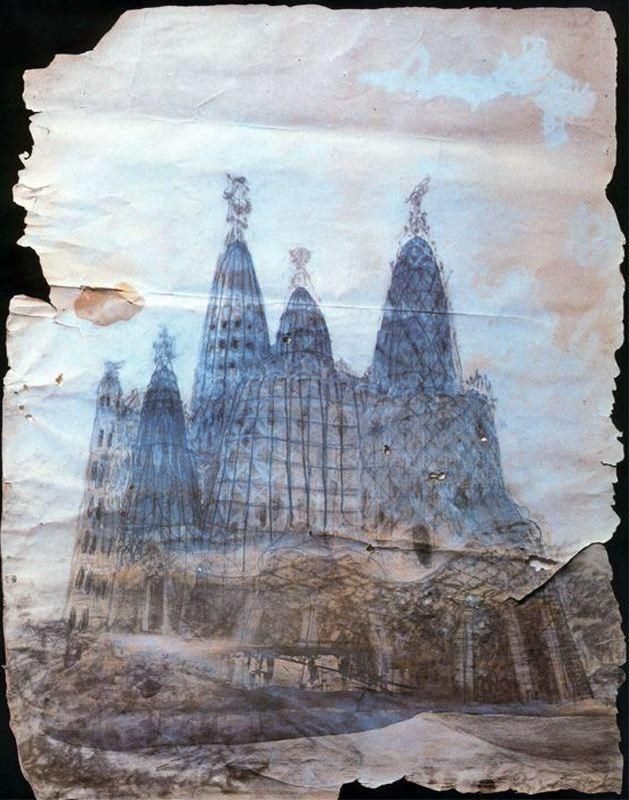
Güell He commissioned a church worthy of his neighborhood and Gaudí She designed it on a grand scale: a oval floor plan measuring 25 x 63 meters, with several ships, towers and a 40-meter dome tall. first stone the 4th October 1908, before the cream of Catalan industry and politics.
Only the lower nave—the crypt— was built and blessed in 1915. When the family withdrew their funding in 1914, construction stopped forever. This unfinished temple is now part of its mystery: in the Permanent Exhibition, you can admire the scale models that allow you to visualize what it would have looked like.
Want to know more? Visit us
The best way to understand Gaudí and Güell It's about visiting the place where their story unfolded. We'll be waiting for you at the Colònia Güell.
Tickets →Want to know what our visitors think?
"A hidden gem of Gaudí, calmer than the Sagrada FamíliaThe audio guide was excellent.
«가우디의 걸작. 조웩하고 아름다운 공간. ""
"Impressive and very well explained. By train, 20 minutes from Plaça Espanya."
"A hidden Gaudí gem — breathtaking crypt, charming village.»
«素晴らしいガウディの作品。静かで見応えがあります。»
«Absolutely worth the short train ride from Barcelona.»